Black Streaks on Your Siding? Here's What's Really Causing Them
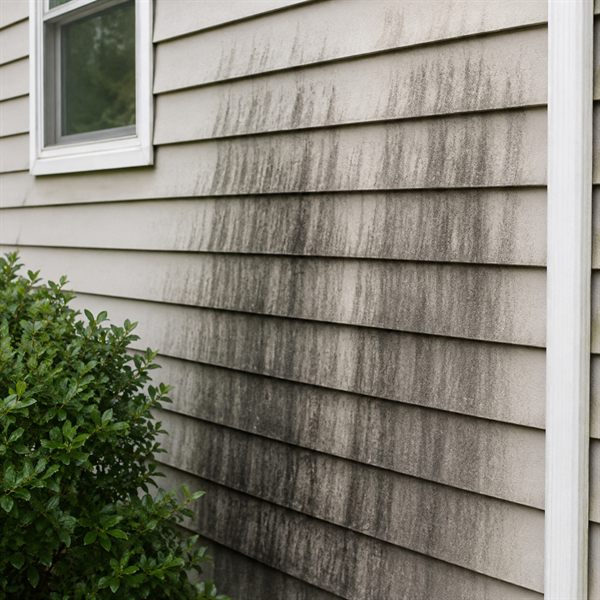
If you've got dark, almost sooty-looking streaks running vertically down your siding, you're not imagining it and it's not just road grime. That pattern — heavier at the top, fading as it runs down — is a specific problem with a specific cause, and it's extremely common on homes throughout the Pittsburgh area.
What's actually causing it
Roof runoff. This is the most common source of black streaking, especially on siding below a roofline or gable end. Asphalt shingles host a bacteria called Gloeocapsa magma, which is what causes the dark streaking you see on roofs themselves. When it rains, water carrying that bacteria and dissolved shingle granules washes down and drips onto the siding below, leaving the same dark residue in a streaked pattern. If your roof has visible dark streaks, your siding streaking is almost certainly connected to it.
Mold and mildew. Vinyl siding can host its own mold and mildew growth independent of the roof, and some species show up dark gray to black rather than green. Shaded areas, spots near downspouts, and anywhere that stays damp longer after rain are the usual locations.
Airborne dirt trapped in a biofilm. Once a thin layer of mildew or algae forms on siding, it acts almost like flypaper for airborne dirt, pollen, and pollution. That combination is what gives streaking its dark, almost greasy appearance rather than a simple dusty look.
DIY options if you want to try it yourself
If the streaking is light and you want to handle it yourself before calling anyone, here's a reasonable approach:
Mix a safe cleaning solution. A solution of water with a small amount of oxygen bleach (not chlorine bleach, which can discolor siding and kill nearby plants) works on most mold, mildew, and light roof-runoff staining. Follow the product's dilution ratio rather than guessing — too strong a mix can streak or dull the siding finish.
Apply with a soft brush, not a scrub pad. Work from the bottom up to avoid streaking the solution into dry siding above, then let it sit for the time the product recommends before rinsing.
Rinse thoroughly with a garden hose. A regular hose nozzle is enough for a light touch-up. Avoid using a consumer pressure washer on siding unless you're experienced with it — too much pressure or holding the wand too close can force water behind the panels or crack the vinyl, which turns a cosmetic problem into a repair.
Address the roof separately if that's the source. If the streaking is clearly running down from the roofline, cleaning the siding alone will only be a temporary fix. The roof itself needs attention, or the same streaks will reappear after the next few rains.
When it makes sense to call us instead
DIY works fine for small, light areas, but a few situations are worth handing off: streaking that covers a large section of the house, staining that's been there long enough to set in, two-story sections you can't safely reach, or a case where you're not sure whether the source is the roof, the siding itself, or both. We diagnose the actual cause before treating it, use a soft-wash approach calibrated to vinyl siding so nothing gets damaged, and can flag if the roof needs a separate soft wash to stop the problem from just coming back.
Why this shows up so often around Pittsburgh
Our humid summers and the region's tree cover create ideal conditions for the bacteria and mildew behind this kind of streaking, and a lot of the area's housing stock has asphalt shingle roofs old enough to host a heavy Gloeocapsa magma colony. Homes on shaded lots or with roofs that haven't been cleaned in several years tend to show the most pronounced streaking on the siding below.
If you're seeing black streaks on your home anywhere in Pittsburgh or the surrounding Allegheny County area and want an honest read on what's causing it, reach out — we'll take a look and tell you straight whether it's a quick fix or something that needs the roof addressed too.
Ready for a free estimate?
Give us a call or send a message — we serve Pittsburgh and the surrounding Allegheny County area.
(412) 695-3229 Request a quote